Niacinamide Side Effects
Niacinamide is the best-tolerated active most people will ever use, which is exactly why it is confusing when it goes wrong. The four things that actually happen, the dose question nobody raises, the myth to ignore, and how to tell whether the problem is even the niacinamide.
How this is funded: we earn a commission if you buy through our links, at no extra cost to you. It never changes which product we recommend, and we’ll tell you when we’d skip one. Full disclosure.
Niacinamide is the active we recommend most often to people who are nervous about actives, and we stand by that: no adjustment phase, no sun-sensitivity consideration, no pH requirement, a pH close to skin’s own, and a long cosmetic track record. That is also exactly why it is so disorienting when it does cause a problem — nothing in the product copy prepares you for it.
So here is the honest inventory: four things that genuinely happen, one myth, one dose question nobody raises, and a method for working out whether the niacinamide is even the culprit.
The short answer
The real side effects are a brief flush, stinging on application, small bumps or roughness after a few weeks, and ordinary irritation — redness and tightness. All four are uncommon, all four are reversible, and in most cases the cause is the dose or something else in the bottle rather than the vitamin itself.
Niacinamide does notcause purging, does not raise sun sensitivity, and has no established long-term downside. If something severe is happening — a spreading rash, swelling, blistering — that is not a niacinamide side effect and it needs a doctor rather than a different serum.
1. The flush
A warm, pink feeling across the face shortly after applying, settling within an hour. It is harmless and it is the side effect with the clearest explanation.
Niacin — nicotinic acid — is a potent vasodilator and flushing agent. Niacinamide is a different molecule and is not, which is precisely why cosmetic chemists use it. The reason flushing shows up in this conversation at all is the old laboratory finding that niacinamide and ascorbic acid, combined under heat in solution, can convert partly to nicotinic acid. That is the same piece of chemistry behind the “never use niacinamide with vitamin C” rule, and the same qualification applies: finished, buffered, stabilized products applied a minute apart are a long way from a heated solution. Vitamin C and niacinamide goes through it properly.
What to do:nothing, if it passes. If it bothers you, use the niacinamide at the other end of the day from your vitamin C — the split costs nothing, and niacinamide serum: morning or night covers the arrangement.
2. Stinging on application
The most common complaint, and the one most often misattributed. A serum is not one ingredient. The Ordinary’s 10% serum, which is the most widely owned niacinamide product in the world, carries eleven ingredients: water, niacinamide, pentylene glycol, zinc PCA, dimethyl isosorbide, two gums, a solubiliser, ethoxydiglycol and two preservatives. Several of those are solvents and penetration enhancers. Any of them is a more plausible stinging candidate than the vitamin.
There is also a simpler explanation that covers a lot of cases: your barrier is already compromised. If you are running a retinoid or a leave-on acid, almost anything applied afterwards stings, and the niacinamide is the thing you happened to notice. The tells are in signs of over-exfoliation.
What to do:try a shorter, plainer 10% from a different brand before you conclude you cannot use the ingredient. If that stings too, get the niacinamide from a moisturizer instead — a ceramide cream carrying niacinamide delivers a lower effective dose in a vehicle that is repairing the barrier at the same time.
3. Small bumps, roughness or breakouts
Usually appearing a few weeks in, and usually in people using a high percentage daily. Two things are worth separating here.
First, this is not purging. Purging is specific to ingredients that accelerate cell turnover — retinoids and the exfoliating acids — where microcomedones already in the skin surface faster than they otherwise would. Niacinamide has no such mechanism, so there is nothing to push through and no reason to persist in hope. The distinction matters enough that we gave it its own page: skin purging vs breakout.
Second, a reaction to a niacinamide productis not the same as a reaction to niacinamide. The brand of the most popular serum publishes a non-comedogenic claim based on a 35-subject, 8-week study — which is a small panel and a claim rather than a finding, and we report it as such. Thirty-five people is not enough to tell you how your skin will behave.
What to do: stop for a week, then reintroduce at a lower percentage twice a week. If the bumps come back on the same product and not on a different 10%, it was the formula. If they come back on both, it was the ingredient, and that is unusual but it happens.
4. Plain irritation — and the dose question behind it
Redness, tightness, a dry feeling. Ordinary over-use, and here is the part of the conversation that almost never comes up.
The shelf standard for a niacinamide serum is 10% to 12%. The trial that made niacinamide famous for facial skin used 5%— and over twelve weeks reported improvements in fine lines and wrinkles, hyperpigmented spots, red blotchiness, skin sallowness and elasticity. The sebum study used 2%. We are not aware of published work showing that 10% or 12% outperforms 5% on a face.
That asymmetry has a practical consequence. If a 10% serum irritates you, dropping the dose is very unlikely to cost you the benefit, because the benefit was demonstrated at half that figure. It is the opposite of the retinoid situation, where potency and irritation genuinely trade off against each other. Here you can probably have the result and the comfort.
What to do: use less, less often, or get it from a moisturizer. Best niacinamide serums ranks every stated percentage we can verify, and makes the same point about 12%.
What niacinamide does not do
It does not raise sun sensitivity. Unlike retinoids and the exfoliating acids, there is no photosensitivity consideration. You still need sunscreen; not because of this.
It does not cause purging. See above. Anything that starts after you add it is a reaction.
It does not deactivate your vitamin C. And your vitamin C does not deactivate it. Note that The Ordinary still prints a “do not use with direct or indirect vitamin C” note on its own page, so if you prefer to follow the brand, split them across the day.
It has no documented long-term downside. No tolerance effect, no rebound on stopping, nothing cumulative. If your skin gets worse after a year on the same serum, something else in your routine or your environment changed.
Topical is not oral
Worth stating plainly, because the search results for this question mix the two freely. Oral nicotinamide is a systemic supplement with its own dosing, interactions and medical considerations; it is studied for things a serum has nothing to do with. If you are reading about liver values, body-weight dosing, or interactions with medication, that is the oral conversation and it does not transfer to a bottle you put on your cheeks.
Nothing on this site is medical advice, and supplement questions belong with a doctor or a pharmacist rather than a skincare publication.
How to work out whether it is the niacinamide at all
The honest answer to most reaction questions is “we cannot tell from here, and nor can you until you simplify.” The method:
Stop everything active for a week. Gentle cleanser, plain moisturizer, sunscreen. Not a reduced routine — a stripped one. The AAD’s dry-skin guidance on moisturizing damp skin is the whole of the technique, and how to repair your skin barrier is the fuller plan.
Then reintroduce one thing, twice a week, for a fortnight. If it is fine, add the next. This is slow and it is the only approach that produces an answer. Most people discover the problem was two actives sharing a night rather than either one alone — how to layer actives has the conflict matrix.
Patch test the suspect before you commit again. A few nights on one inner forearm, per how to patch test, rather than a single application on your face.
When to see a doctor instead
A spreading rash, swelling, blistering, weeping, or anything painful is not a niacinamide side effect and should not be managed by swapping serums. Neither is a persistent rash around the mouth, which has its own specific cause and its own specific fix — azelaic acid for perioral dermatitis explains why. See a board-certified dermatologist.
Bottom line
Niacinamide is genuinely well tolerated, and the four things that go wrong with it are mild, reversible and mostly about dose or the rest of the formula. The single most useful fact on this page is that the studied dose is 5% and the shelf sells 10% to 12%, which means dropping the strength is a cheap fix that probably costs you nothing. Stop for a week, reintroduce one thing at a time, go lower rather than abandoning the ingredient, and do not push through bumps expecting them to be purging — with this active, they never are.
General guidance, not medical advice. Actives & Acids is written by a skincare enthusiast, not a dermatologist. For a diagnosis, a reaction, or a prescription active like tretinoin, see a qualified professional. Introduce any new active slowly and patch-test first.
What we'd actually buy
Chosen from the same registry as our roundups, on published formulation facts rather than hands-on testing — here is exactly what we do instead.
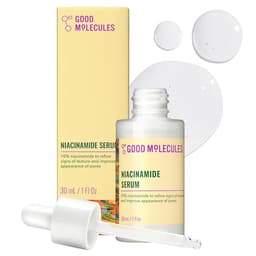
Good Molecules
Niacinamide Serum (10%)
The step down if a 10% serum is stinging. A minimal fragrance-free 10% with very little else in the bottle, which matters because a lot of 'niacinamide reactions' are reactions to the other ingredients rather than the vitamin.
See it ranked in fullPrice as of October 10, 2026. #ad How we’re funded
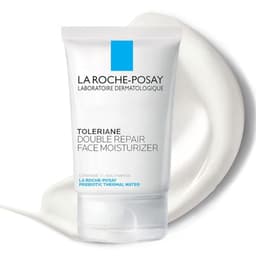
La Roche-Posay
Toleriane Double Repair Face Moisturizer
The lowest-stakes way to keep niacinamide in a routine that cannot take a serum. It arrives inside a ceramide moisturizer, at a lower effective dose, in a step that is repairing the barrier at the same time.
See it ranked in fullPrice as of October 10, 2026. #ad How we’re funded
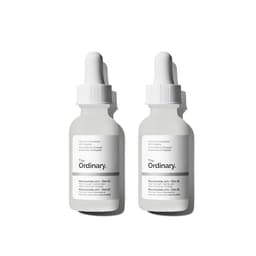
The Ordinary
Niacinamide 10% + Zinc 1%
The reference point rather than the remedy. If you want to know what you are reacting to, this is the one with a published pH of 5.00-6.50 and an eleven-item ingredient list you can actually read — useful for elimination, and a fine serum once your skin is settled.
Read our full reviewFrequently asked questions
What are the side effects of niacinamide on the skin?
In practice, four things: a transient flush or warmth shortly after applying it, stinging or prickling on application, small bumps or roughness after a few weeks of use, and simple irritation — redness and tightness — that is usually about dose or about something else in the formula. None of them is common, and niacinamide is one of the best-tolerated actives available over the counter. If something more dramatic is happening, it is worth considering whether the niacinamide is the cause at all.
Why does my niacinamide serum sting?
Three likely reasons. The dose: the shelf standard is 10% to 12% where the classic facial trial used 5%, so you may simply be using more than you need. The rest of the formula: a serum is not one ingredient, and solvents, preservatives and penetration enhancers are all candidates. Or your barrier is already compromised — if you are also using a retinoid or an acid, almost anything will sting, including water. Try a lower percentage, a shorter ingredient list, or a week off actives.
Does niacinamide cause purging?
No. Purging is a specific phenomenon tied to ingredients that accelerate cell turnover — retinoids and the exfoliating acids — where existing microcomedones surface faster than usual. Niacinamide does not work that way, so breakouts that start after you add it are not purging and will not resolve by pushing through. Treat them as a reaction, stop the product, and reintroduce it later if you want to test it properly.
Can niacinamide cause flushing?
Occasionally, briefly, and the mechanism is worth knowing because it is the same one behind the vitamin C myth. Nicotinic acid — niacin — is a potent flushing agent; niacinamide is not, which is precisely why cosmetics use it. Old laboratory work showed that niacinamide and ascorbic acid combined under heat in solution can convert in part to nicotinic acid, and that is where the story comes from. If you get a flush, it passes within an hour and it is not damage.
Is 10% niacinamide too much?
It is more than the evidence asks for, which is not the same as too much. The well-known trial of niacinamide on aging facial skin used 5% and reported improvements in fine lines, hyperpigmented spots, red blotchiness and yellowing over twelve weeks. The sebum study used 2%. Nothing published that we are aware of shows 10% or 12% outperforming 5% on a face. So if a 10% serum is irritating you, dropping to a lower dose is very unlikely to cost you results.
Are there long-term side effects of using niacinamide?
Nothing established. The reviews of nicotinamide in skin describe effects on barrier function, ceramide production and pigmentation, and the ingredient has a long record in cosmetics with a good safety profile. There is no documented tolerance effect, no rebound on stopping, and no cumulative sun-sensitivity consideration of the kind that comes with retinoids and AHAs. If your skin is unhappy after months of use, look for a change in your routine rather than at the niacinamide.
What should I do if I am reacting to it?
Stop using it entirely for a week — not reduce it, stop it — and let your skin settle on a gentle cleanser, a plain moisturizer and sunscreen. Then reintroduce one product at a time, twice a week, so you can tell what caused what. If you want to keep the ingredient, go back in at a lower percentage or inside a moisturizer rather than as a serum. Our barrier-repair guide is the recovery plan.
Does the pH matter?
It is one of the few label figures you can check. The Ordinary publishes a pH of 5.00 to 6.50 for its 10% serum, which is close to skin's own range and part of why niacinamide is comfortable for most people — unlike a leave-on acid, it is not relying on a low pH to work. If a niacinamide product stings badly, a pH problem is an unlikely explanation and the rest of the formula is a far better suspect.
Are oral niacinamide side effects the same?
No, and conflating the two is the biggest source of bad information on this question. Oral nicotinamide is a supplement taken systemically with its own dose considerations, interactions and medical context; a serum applied to your face is not. Anything you read about liver values, dosing by body weight or drug interactions belongs to the oral conversation. Nothing on this page is medical advice, and supplement questions belong with a doctor or pharmacist.
Sources
- Mechanistic Basis and Clinical Evidence for Nicotinamide (Niacinamide) in Skin (PMC) — Review of niacinamide's barrier, ceramide and pigmentation effects (accessed July 17, 2026)
- Niacinamide: A B vitamin that improves aging facial skin appearance (PubMed) — Bissett et al. — 5% niacinamide improves wrinkles, spots and texture (accessed July 17, 2026)
- The effect of 2% niacinamide on facial sebum production (PubMed) — Draelos et al., Journal of Cosmetic and Laser Therapy 2006 — a 2% niacinamide moisturizer lowered the sebum excretion rate in 100 Japanese subjects at 2 and 4 weeks (double-blind, placebo-controlled) and lowered casual sebum levels, but not the excretion rate, in 30 Caucasian subjects at 6 weeks (accessed September 19, 2026)
- Topical nicotinamide plus antibacterial adhesive agents and zinc-pyrrolidone carboxylic acid versus placebo as an adjuvant treatment for moderate acne vulgaris (PubMed) — Sitohang et al., Journal of Clinical and Aesthetic Dermatology 2020 — multicenter double-blind RCT, 140 patients: a nicotinamide + zinc PCA + antibacterial-adhesive cream used alongside adapalene reduced non-inflammatory lesions by week two versus placebo, with no difference in adverse effects; the abstract does not state the percentages used (accessed September 19, 2026)
- The Ordinary — Niacinamide 10% + Zinc 1% (official product page) — The brand's own listing: the full ingredient list (Aqua, Niacinamide, Pentylene Glycol, Zinc PCA, Dimethyl Isosorbide, Tamarindus Indica Seed Gum, Xanthan Gum, Isoceteth-20, Ethoxydiglycol, Phenoxyethanol, Chlorphenesin), a stated pH of 5.00-6.50, the 30 mL and 60 mL sizes, the 'do not use with direct or indirect vitamin C' note, and the non-comedogenic claim from a 35-subject, 8-week study (accessed September 19, 2026)
- American Academy of Dermatology — Dermatologists' top tips for relieving dry skin — AAD on moisturizing damp skin and choosing a cream for dry skin (accessed July 17, 2026)
Keep reading
Niacinamide benefits
The upside, with the percentages the studies actually used rather than the ones on the box.
Read the guideBest niacinamide serums
Every stated percentage compared, including why 12% is not an upgrade on 10%.
See the picksHow to use niacinamide serum
Amount, order and frequency — most reactions on this page come from getting one of those wrong.
Read the guideHow to repair your skin barrier
The recovery plan if you have reacted: what to drop, what to keep, and in what order things go back.
Read the guideSkin purging vs breakout
How to tell the difference — and why what niacinamide causes is never the first one.
Read the guideNiacinamide serum: morning or night?
The timing question, and why moving it across the day will not fix a reaction.
Read the guide