Peptides for Skin: The Benefits, and the Honest Limits
Peptides are the most plausible-sounding ingredient in skincare and the hardest to verify. Here is what they are, the three benefits worth expecting, the absorption problem the research is candid about, and why not one peptide product we rank will tell you how much is in the bottle.
How this is funded: we earn a commission if you buy through our links, at no extra cost to you. It never changes which product we recommend, and we’ll tell you when we’d skip one. Full disclosure.
The short version:peptides are worth modest money and not premium money. They are the most comfortable active in skincare — no adjustment phase, no sun caveat, no sting — and the least verifiable, because the published reviews are candid that absorption is the limiting problem and that the evidence across the category is uneven. Buy a cheap one, give it three months, and judge it on how your skin looks rather than on the mechanism on the box.
What a peptide is
A peptide is a short chain of amino acids — a fragment of a protein. Your skin is full of proteins, collagen among them, and the cosmetic idea is that certain fragments act as messages: apply the fragment, and the skin behaves as though repair is needed.
The reviews of topical peptides as cosmeceuticals sort the common ones into families by that proposed action — signalling peptides, carrier peptides that deliver trace minerals such as copper, and peptides that interfere with the nerve signalling behind muscle contraction. Those categories are useful for reading a label. They are not evidence on their own.
The three benefits worth expecting
1. Hydration and a smoother surface.Reliable, immediate, and mostly not the peptides. A peptide serum is a water-based formula carrying humectants — our cheapest pick is built on hyaluronic acid — and the reference literature on moisturizers is clear about what humectants do. This part works. Give the credit where it belongs.
2. A modest improvement in firmness, over months. This is the actual peptide claim, and it is the one with the thinnest support per individual product. It is plausible, it is sometimes measured, and it is slow. Three months is the right unit of patience.
3. Tolerability — the benefit nobody lists. For people who cannot use a retinoid, peptides are one of the only anti-aging-adjacent options that will not start a two-week flaking phase. That is a real benefit even if the firming effect is small, because the alternative for many readers is nothing at all.
What to look for on a peptide label
Three things, in this order.
Named peptide technologies rather than “peptide complex”.A product that names Matrixyl, copper tripeptide or acetyl hexapeptide is at least telling you what it bought. A “peptide complex” with no names is a marketing phrase.
A base you would buy anyway. Since the hydration half of the benefit is coming from the base, a peptide serum built on hyaluronic acid, glycerin or ceramides is a better purchase than one built on nothing.
A price that reflects the uncertainty. This is the practical rule we apply across the registry: the firmer the evidence, the more it is worth paying up for. Peptides do not clear that bar, so the sensible way to try them is cheaply.
And here is the thing we check that nobody advertises: not one of the five peptide products in our registry publishes a concentration for any peptide in it.Every entry records “Not published”. Compare that with the acids, where 2%, 7%, 8% and 10% are printed on the bottle, or with the two retinol serums that print 0.5% and 1%. You cannot compare peptide products on dose because no one in the category will give you one — which means claims that one peptide serum is “stronger” than another are unfalsifiable.
The absorption problem, stated plainly
The reviews of cosmetic peptides keep returning to the same limitation: peptides are relatively large, water-loving molecules, and the skin barrier exists precisely to keep molecules like that out. A peptide that cannot reach the layer where the proposed signalling happens cannot do the signalling, however good the mechanism sounds in a brochure.
That is not a reason to dismiss the category. It is the reason the same reviews describe the clinical evidence as mixed, and it is the reason we rank peptides below retinoids, sunscreen and the acids rather than beside them. An honest comparison: the literature on topical retinol and skin aging is a body of trials; the peptide literature is a set of promising mechanisms with unevenly reported outcomes.
Where peptides sit in a routine
Morning, after cleansing, before moisturizer and sunscreen. Peptides have no photosensitivity consideration, so the morning slot is free — and it keeps them away from the actives that want the evening.
Not mixed into an acid or a low-pH vitamin C. Copper peptides in particular are conventionally given their own layer. Nothing bad happens if you ignore this; you may simply be wasting the serum.
Alongside a retinoid, not instead of one— unless a retinoid is off the table for you, in which case peptides plus sunscreen plus a ceramide moisturizer is a perfectly respectable routine. How to layer actives has the order, and skincare routine order has the sequence.
What peptides do not do
They do not replace collagen.Neither does collagen in a cream — it is a large protein that hydrates the surface and goes no further. Retinol vs collagen sets out that whole argument.
They do not freeze muscles. Some peptides are marketed by analogy to injectable treatments. A cosmetic cream and an injection into a muscle are not comparable interventions, and we have no trial to offer you that says otherwise.
They do not do anything for hair, and oral peptides are a different subject. Both turn up in the same search suggestions and neither belongs on a page about a serum you put on your face.
Bottom line
Peptides are comfortable, plausible and under-documented. The hydration you will notice is largely the serum’s base; the firming claim is slow and modest; the tolerability is genuinely valuable if retinoids are not an option for you. Because no brand in the category publishes a dose, there is no sensible way to pay more for “more peptide” — so buy a cheap, well-formulated one, run it for three months, and keep your sunscreen and your moisturizer as the parts of the routine doing the heavy lifting.
General guidance, not medical advice. Actives & Acids is written by a skincare enthusiast, not a dermatologist. For a diagnosis, a reaction, or a prescription active like tretinoin, see a qualified professional. Introduce any new active slowly and patch-test first.
What we'd actually buy
Chosen from the same registry as our roundups, on published formulation facts rather than hands-on testing — here is exactly what we do instead.
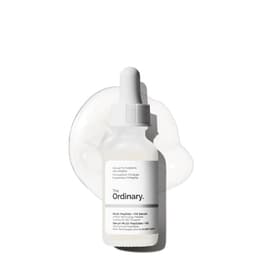
The Ordinary
Multi-Peptide + HA Serum
The right way to run this experiment: several peptide complexes over hyaluronic acid, at a price where three months of finding out costs less than one premium booster. If peptides do nothing for you, you have lost very little.
See it ranked in full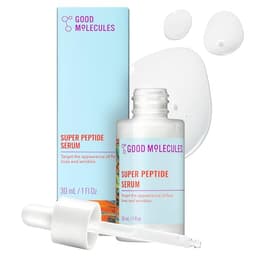
Good Molecules
Super Peptide Serum
The copper peptide option at a drugstore price. Copper tripeptide has more independent literature behind it than most peptides on a label, which makes this the pick with the least hand-waving attached — give it its own layer rather than mixing it into an acid.
See it ranked in fullPrice as of October 18, 2026. #ad How we’re funded
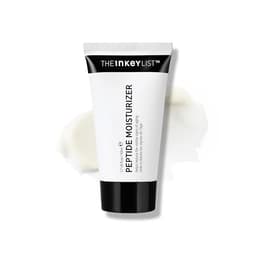
The INKEY List
Peptide Moisturizer
Peptides inside a step you were going to use anyway. If you suspect peptides do not justify a separate serum — a defensible position on this evidence — this is the low-commitment route in, and the moisturizer is doing real work regardless.
See it ranked in fullFrequently asked questions
What do peptides do for your skin?
Peptides are short chains of amino acids, and the cosmetic ones are grouped by what they are supposed to signal: some are said to cue the skin to behave as though it needs to repair, some carry trace minerals such as copper, and some interfere with the nerve signalling behind muscle movement. In practice, what you can reasonably expect from a peptide serum is better-hydrated, smoother-looking skin and a modest improvement in firmness over months. What you should not expect is a retinoid-sized change.
Do peptides actually work?
The reviews of cosmetic peptides are more candid than the marketing: the mechanisms are plausible, some individual peptides have supporting studies, and the overall evidence quality is uneven, with absorption as the recurring limitation. Peptides are relatively large and water-loving molecules, and the skin barrier is specifically built to keep molecules like that out. So the honest summary is: plausible, partially supported, and not in the same evidence class as a retinoid or sunscreen.
Are peptides better than retinol?
No, if the question is evidence for the structural signs of aging. Topical retinol has a body of clinical work behind it that no cosmetic peptide matches. Peptides are better than retinol in one respect that matters to some people: they do not cause an adjustment phase, so they are usable on skin that cannot tolerate a retinoid at all. Think of peptides as the option for people retinoids rule out, not as an upgrade.
Do peptides have side effects?
Very few, which is the honest upside of a low-potency ingredient. There is no adjustment phase, no sun-sensitivity consideration and no established irritation profile for the common cosmetic peptides. If a peptide serum stings, the likely culprits are the other ingredients in it. Anything dramatic — a spreading rash, swelling — is not a peptide effect and needs a doctor.
How long do peptides take to work?
Months, if they are going to. Hydration and surface smoothness can improve in days because the base of the serum is doing that part. Anything that counts as firmness is a slow change, and we would give a peptide product a full three months before deciding. If you want a faster read on a product's value, judge the hydration first and the firmness last.
Can you use peptides with retinol, vitamin C or acids?
With retinol, yes, and it is a sensible pairing — the peptide serum adds no irritation of its own. With a low-pH vitamin C or an exfoliating acid, the conventional advice is to give copper peptides their own slot rather than mixing them directly, which is why we suggest morning peptides and evening actives if you run both. None of these combinations is dangerous; it is a question of not wasting the product.
Is topical collagen the same as peptides?
No, and this is where most peptide marketing goes wrong. Collagen is a very large protein; applied to skin it hydrates the surface and does not travel down to become your own collagen. Peptides are small fragments, which is the entire reason they are used instead. If a product leads with collagen rather than peptides, you are buying a moisturizer with a good story.
Are copper peptides worth it?
They are the peptide we would try first, because copper tripeptide has more independent literature attached to it than most names on a peptide label. The same caveats apply — absorption, uneven evidence, no published dose — and the practical note is to use it on its own layer rather than mixed into an acid or a low-pH serum.
What about oral or injectable peptides?
Different conversation entirely, and not ours. This page is about peptides applied to skin in a cosmetic product. Anything taken by mouth or injected belongs with a doctor or pharmacist, and the autocomplete suggestions that mix the two are mixing a skincare question with a medical one.
Sources
- Topical peptides as cosmeceuticals (PubMed) — Review of cosmetic peptides — mechanisms, absorption limits and evidence quality (accessed August 19, 2026)
- Human Skin Aging and the Anti-Aging Properties of Retinol (PubMed) — Review of topical retinol's effect on collagen and photoaging (accessed July 17, 2026)
- Moisturizers — StatPearls (NCBI Bookshelf) — Reference on humectants (hyaluronic acid), occlusives and emollients (accessed July 17, 2026)
- Benefits of topical hyaluronic acid for skin quality and signs of skin aging (PMC) — Literature review plus clinical evidence on what topically applied hyaluronic acid does for hydration and the appearance of fine lines (accessed September 12, 2026)
- American Academy of Dermatology — Skin care basics — AAD consumer guidance on cleansing, moisturizing and sun protection (accessed July 17, 2026)
Keep reading
Best peptide serums
Five peptide products ranked, including which peptide classes each one actually names.
See the picksCeramides vs peptides
If you are choosing between a barrier product and a peptide serum, start here.
Read the comparisonRetinol vs collagen
Why a collagen cream is a moisturizer, and where peptides sit between the two.
Read the comparisonBest actives for aging skin
The whole shelf ranked by evidence, with peptides placed honestly in it.
See the picksCeramides benefits
The barrier ingredient to own before you add a peptide serum.
Read the guideCeramides vs hyaluronic acid
The two ingredients doing most of the work in any peptide serum's base.
Read the comparison